
How to keep your Google Ads campaigns brand safe: simple steps for marketers
No matter the size of your campaigns, performance isn’t the only measure of success in Google Ads. Even high-converting campaigns can damage your brand if ads appear alongside unsafe or inappropriate content. Brand safety matters because it protects your reputation, maintains audience trust, prevents wasted ad spend, and ensures your campaigns deliver consistent, high-quality results.
Ads placed in unsafe or irrelevant environments can reduce engagement, lower click-through rates, drive poor-quality traffic, and negatively impact overall campaign performance. For marketers, maintaining brand safety is essential not only for protecting your brand but also for maximising ROI, keeping your campaigns efficient, and avoiding costly mistakes.
This guide provides actionable steps for marketers to keep their Google Ads campaigns brand safe, covering inventory selection, sensitive content exclusions, content labels, and theme exclusions.
Why brand safety matters in Google Ads
Google Ads placements appear across millions of websites, apps, and videos. Without proper controls, your ads can end up next to content that conflicts with your brand values. Brand safety is important across all major Google Ads campaign types, including:
Display campaigns
YouTube campaigns
Video campaigns
Demand Gen campaigns
Performance Max campaigns
AI Max campaigns
Poor brand safety can lead to:
Ads appearing alongside inappropriate or controversial content
Reduced brand credibility and audience trust
Wasted ad spend on low-quality placements
Inconsistent campaign performance
Maintaining brand safety ensures your ads appear in predictable, relevant, and trustworthy environments.
Choose the right inventory
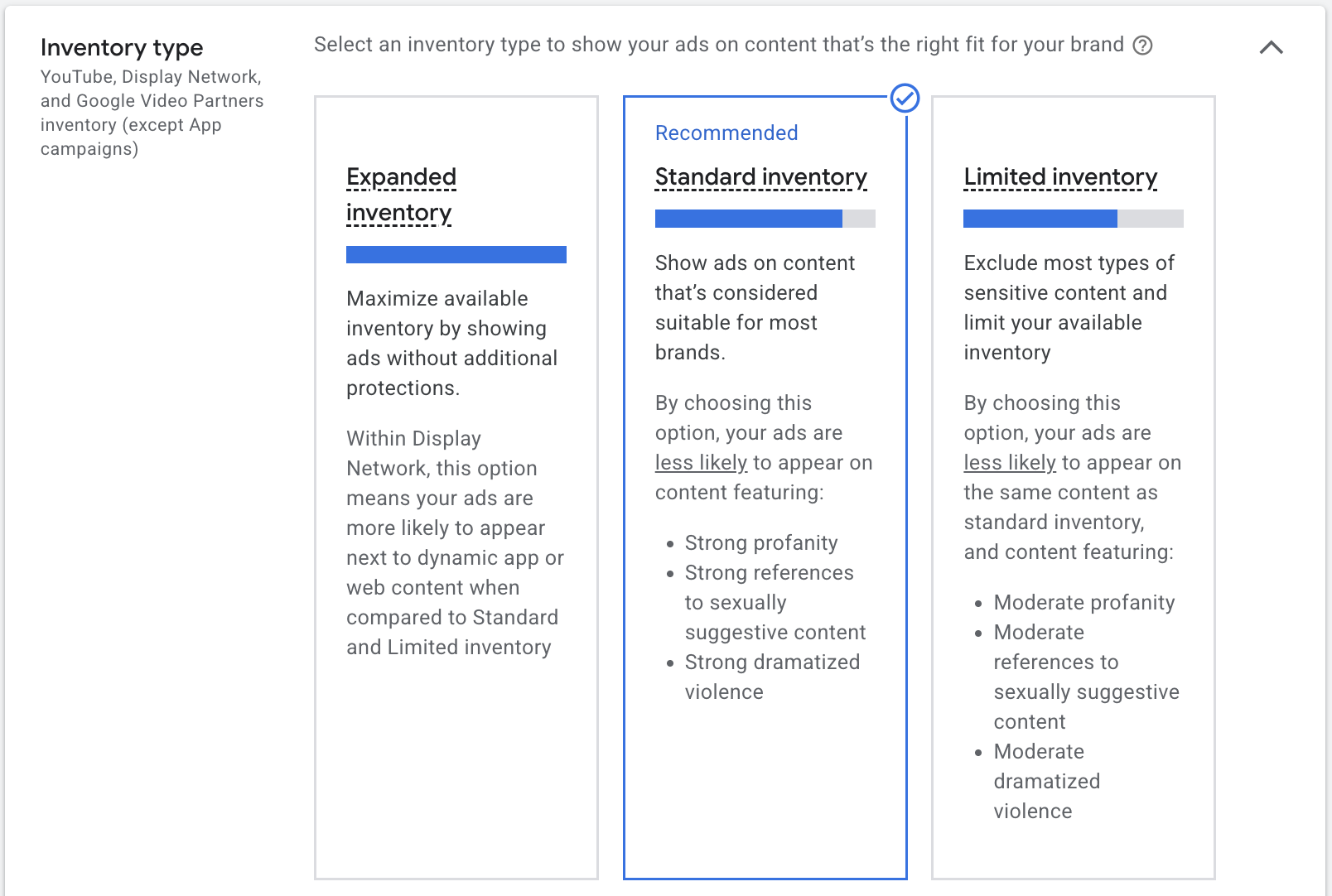
Google Ads provides three inventory types to control the nature of content your ads may appear alongside:
Expanded inventory – maximum reach with minimal filtering
Standard inventory – broad reach with responsible filtering
Limited inventory – the strictest filtering for predictable and brand-safe environments
We recommend standard or limited inventory for most brands. These options reduce exposure to unpredictable or unsuitable placements while maintaining healthy performance and reach.
Exclude sensitive content
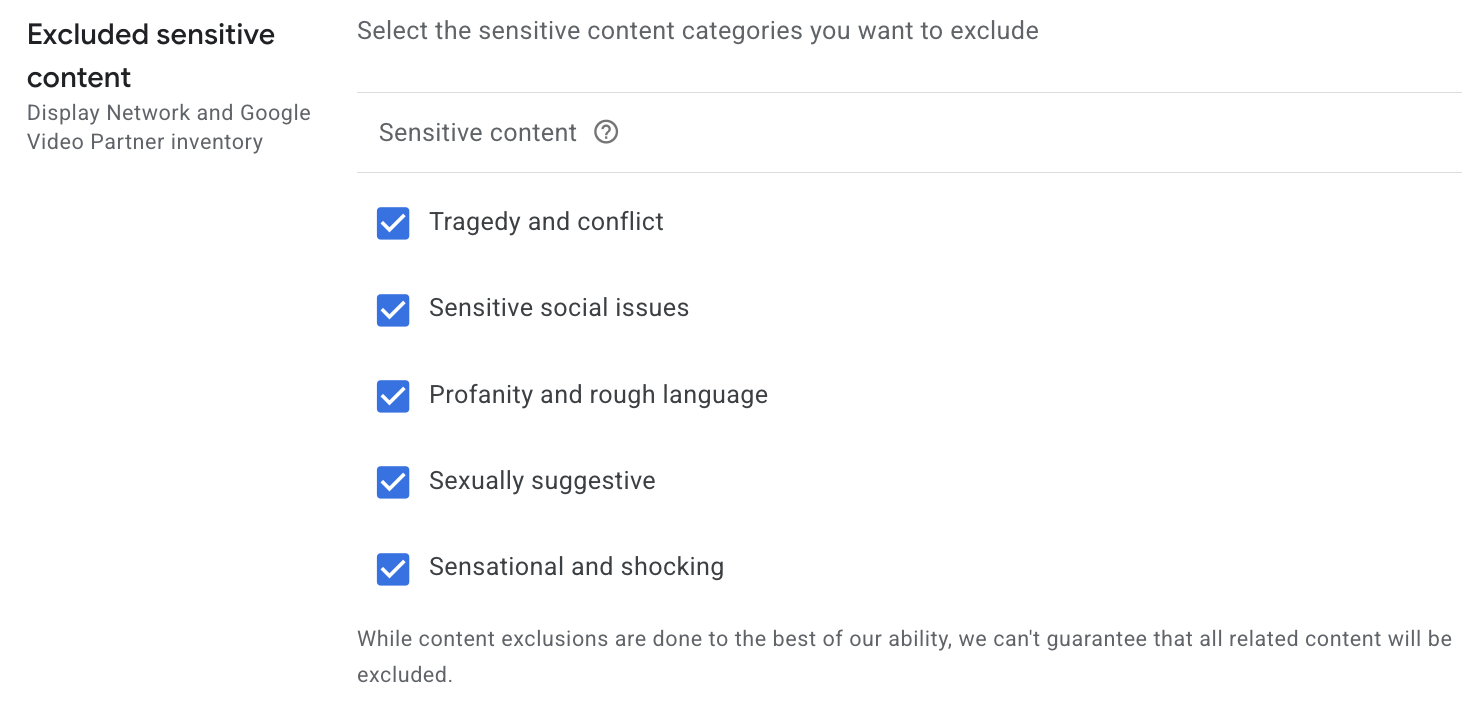
Google allows advertisers to exclude content categories that may be unsuitable for their brand. These exclusions are essential because they prevent your ads appearing near controversial or inappropriate content that can damage brand perception.
The official Google-defined sensitive content exclusions are:
Tragedy and conflict
Sensitive social issues
Profanity and rough language
Sexually suggestive content
Sensational and shocking content
Applying these exclusions ensures your ads remain in safe contexts, protecting both brand reputation and campaign efficiency.
Beyond inventory: content labels & content types
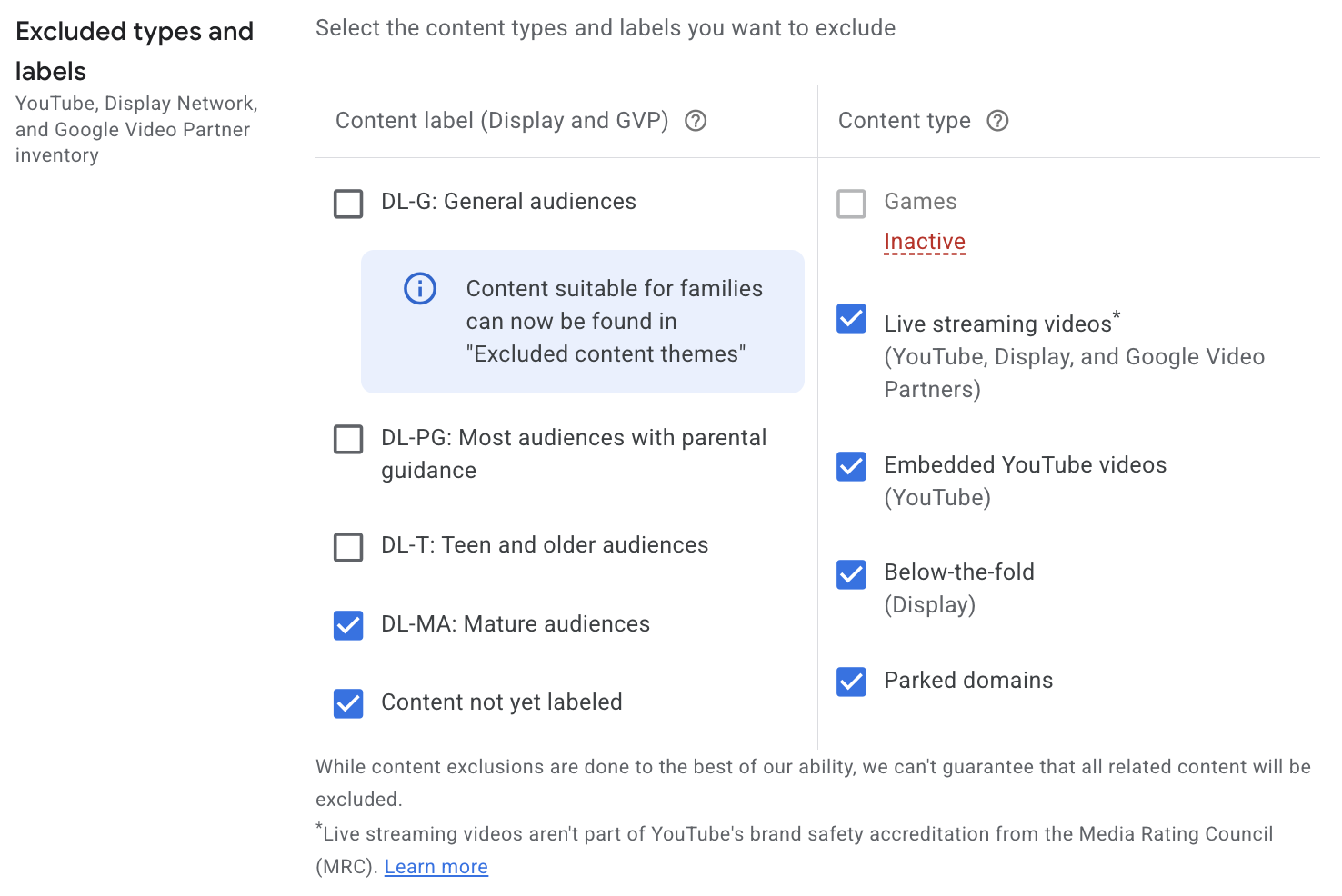
Content labels classify content based on audience suitability. Marketers should focus on:
mature-audience content
content that has not yet been labelled and therefore may contain unpredictable or unsuitable material
We recommend enabling label-based filtering to ensure your ads appear only next to content that has been reviewed and is appropriate for your audience.
Even with inventory and content exclusions in place, some placement environments can still be unpredictable or deliver low value. Google’s content-type filters allow for more refined control, helping you avoid:
Live streaming videos
Live content is unpredictable, making it higher risk for brand-unsafe moments.Below-the-fold placements
Ads appear outside the user’s initial view and often result in low engagement.Embedded videos
Videos placed within external sites where surrounding content cannot be controlled.Parked domains
Low-quality, low-content sites created primarily to serve ads.
Excluding these content types helps ensure your ads appear in higher-quality, predictable environments where audience engagement is stronger.
Content theme exclusions
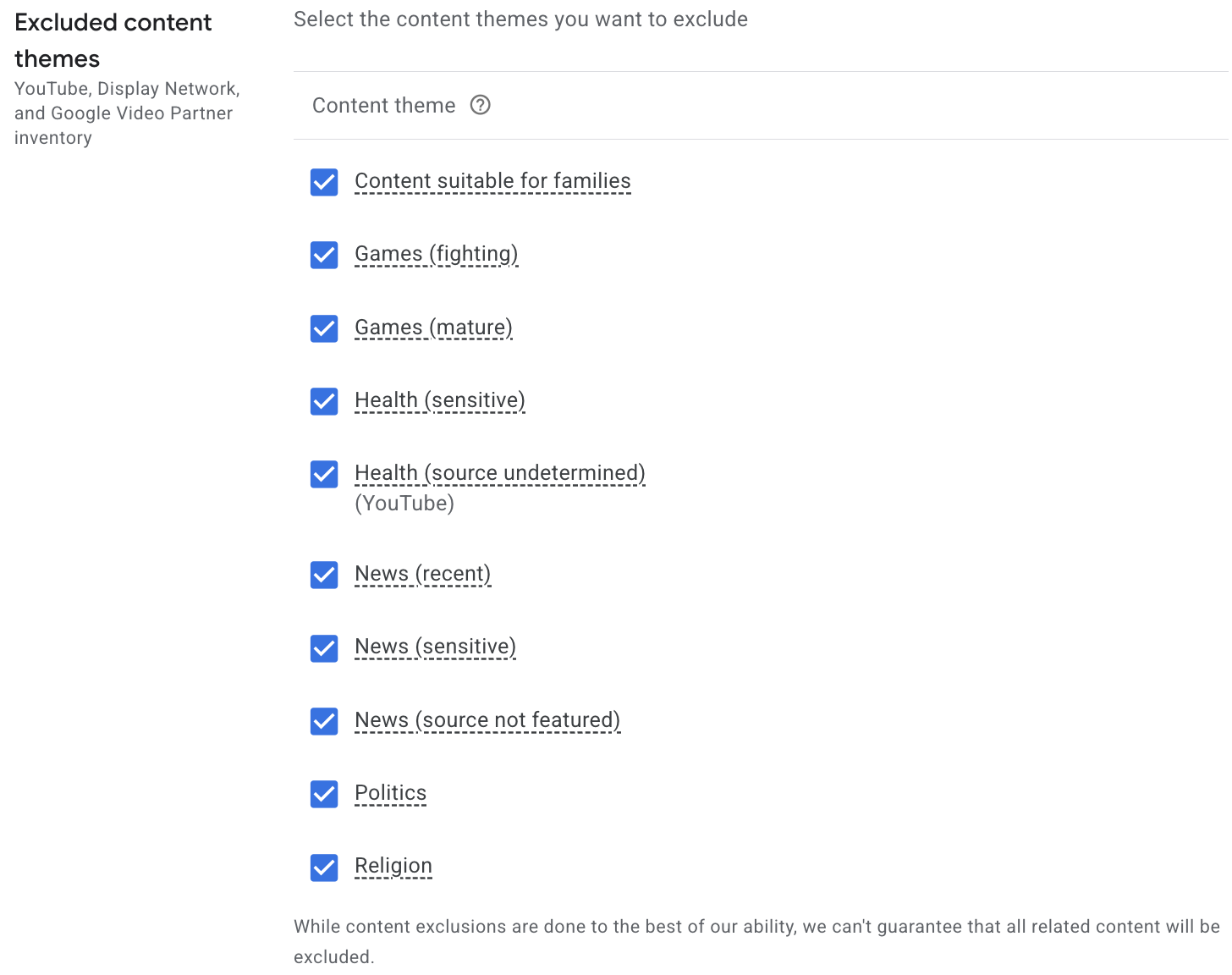
Content theme exclusions block entire categories of content that may be misaligned with your brand. These themes often include content that is sensitive, unpredictable or irrelevant to your message.
Themes worth excluding include:
News
Politics
Religion
Content suitable for families (Kids content)
Health
Games
These exclusions help avoid placements that may carry emotional, cultural or contextual risk. Marketers should review theme settings regularly to ensure alignment with brand positioning.
Google Ads brand safety checklist for marketers
Choose standard or limited inventory
Exclude all official Google sensitive content categories
Avoid risky content types such as live streams, below-the-fold placements, embedded videos and parked domains
Apply content labels to restrict ads from mature or unlabelled content
Use theme exclusions to avoid categories misaligned with your brand
Regularly review placement reports and refine settings
Final thoughts
Brand safety isn’t a one-off task, it’s an ongoing part of campaign management. Regularly reviewing inventory, content types, labels, and theme exclusions ensures your Google Ads campaigns run in safe, relevant environments.
At Percept, we help clients optimise their Google Ads setups to maximise brand safety and campaign performance. From selecting the right inventory and applying sensitive content exclusions to implementing content labels and theme exclusions, we ensure campaigns are aligned with brand values and deliver high-quality, efficient results.
By applying these practical controls and leveraging our expertise, marketers can maintain brand integrity, improve campaign setup quality, and confidently scale their Google Ads activity while protecting reputation and ROI.
-
Brand safety in Google Ads ensures that your ads do not appear alongside content that could harm your brand reputation. It involves controlling inventory types, excluding sensitive content, using content labels, and applying theme exclusions to maintain safe, high-quality ad placements.
-
Brand safety matters because unsafe placements can reduce engagement, lower click-through rates, damage trust, and waste ad spend. Ensuring brand safety protects your reputation, improves campaign performance, and maximises ROI.
-
Brand safety applies to all Google Ads campaigns, including Display, YouTube, Video, Demand Gen, Performance Max, and AI Max campaigns. Any campaign can be impacted if ads appear in unsafe or inappropriate environments.
-
Google recommends excluding the following sensitive content categories: Tragedy and conflict, sensitive social issues, profanity and rough language, sexually suggestive content and sensational and shocking content.
-
Content labels classify content based on audience suitability. Applying label-based filters prevents ads from appearing alongside mature content or content that has not yet been reviewed, helping marketers maintain safe and predictable placements.
-
Content theme exclusions block entire categories of content that may not align with your brand. Recommended themes include news, politics, religion, content suitable for families (kids content), health, and games. Regularly reviewing theme exclusions helps campaigns remain aligned with brand values.
